About us
Our historyEngineering with a pedigree — since 2010
Our mission5% of deployment profits go to charity
Why usSix reasons to choose H-corePLC®
Since 2010
Automation engineering office
Koszalin · industrial PLC controllers and deterministic algorithms.
Discover our historyB2C · AQUA Contra
AQUA Contra overviewHow the flow guard works
AQUA Contra DIYSelf-installation · launch April 2027
AQUA Contra BASICWith RE distribution board · launch April 2027
B2B · H-corePLC®
H-corePLC® overviewA platform for businesses and investments
H-corePLC® szychtaConstruction sites · launch Dec 2027 · presentation
H-corePLC® officeOffice and residence · launch Q3 2028
PLC2 for risersMulti-apartment buildings · pre-launch
Not sure which to choose?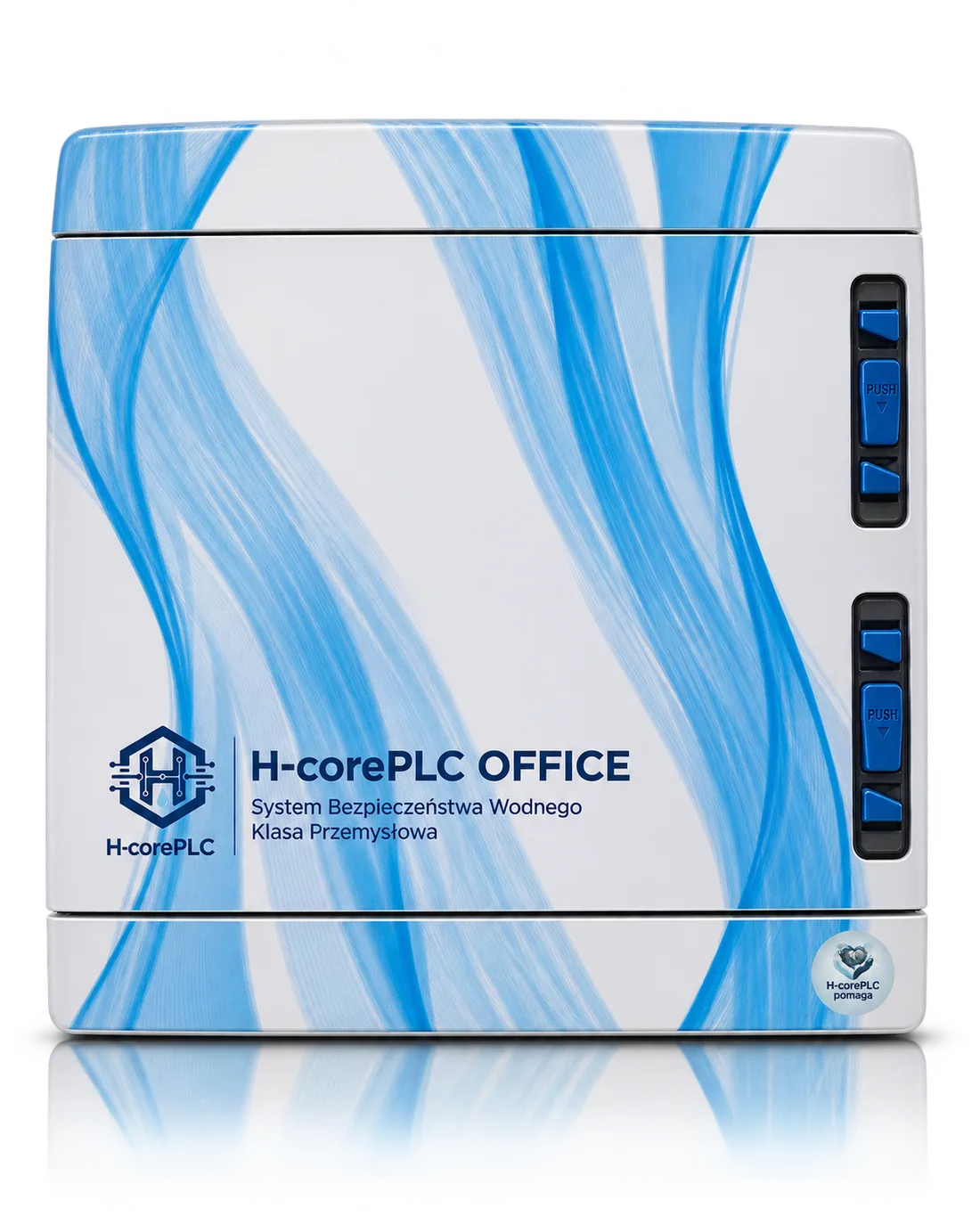 Book a presentation
Home or business?
Compare the systems or book a presentation.
Book a presentationComparisons and questions
Flow vs spot leak detectorWhy react to the cause
FAQFrequently asked questions
Academy
Spot leak detector vs flow measurement
A new technical article comparing the architectures.
Read the articleFor partners
Property developersOne system from construction to handover
WholesalersAQUA Contra kits in your range
Design officesDiagrams and technical conditions
InstallersInstallation with a commissioning report
Live demo
Invite us for a presentation
We will demonstrate the system on a test rig — at your site or in Koszalin.
Book a presentationH-corePLC®
Home/Academy/Flow vs spot leak detector
Academy
Flow vs spot leak detector
Why cloud and AI cannot replace hard PLC logic in leak protection
01State of the art
02Case study
03Flow vs spot leak detector
04FAQ
SummaryH-corePLC® Academy · technical article · approx. 6 min read
Today’s flood protection market is dominated by wireless spot sensors integrated with mobile apps and IoT clouds. Although this solution is cheap and easy to install, it has significant design and logical flaws. In this article we compare the reactive (spot) approach with deterministic volumetric protection based on flow measurement and industrial PLC controllers (Siemens LOGO! 8/9, Eaton easyE4).
Introduction
The dead end of spot sensors.
01
The vast majority of commercial anti-flood systems are based on a simple premise: a small detector with contacts is placed on the floor under the washing machine, sink or dishwasher. When water physically bridges the electrode, a signal is sent to the shut-off valve.
Despite the huge popularity of this solution, from a safety-engineering standpoint a spot detector reacts to the effect, not the cause — and it only protects the selected rooms where a detector is installed, not the entire water installation.
No protection for concealed pipework
A burst pipe inside a wall, a leaking underfloor-heating manifold or a leak above a suspended ceiling remain undetected until the water seeps through the building partitions and spreads across the floor.
Dependence on infrastructure
Cheap Wi-Fi/Zigbee sensors require a working wireless network, a constant power supply to the router and battery power for the sensors themselves.
Risk of cloud failure
Relying on external servers and SaaS algorithms introduces delays and vulnerability to internet outages.
Technology face-off
Spot vs flow-based.
02
The alternative to a distributed network of sensors is central volumetric monitoring installed on the main water connection.
Spot approach (reactive)High risk of damage before any response
LeakWater spreads across the floorRF detector tripsWi-Fi / CloudValve closes
Flow-based approach (deterministic)Direct, immediate response: no cloud, no AI, no reliance on people
Leak anywhereWater meter with pulse transmitterHSC input on the PLCThreshold logicEZ closes
Comparison of key parameters
Volumetric logic
Determinism instead of “AI”.
03
Many manufacturers advertise AI algorithms that analyse household habits based on statistics. In practice, heuristics often fail with unusual water consumption, generating false alarms or letting real leaks through. The architecture described here uses deterministic threshold-and-counter logic, with no cloud and no estimation algorithms involved.
At the heart of the system is
01
Reed-switch pulse transmitter
A water meter with a pulse transmitter generates a signal fed directly into the high-speed counter (HSC) input of the PLC controller.
02
Flow rate monitoring (Qmax)
Threshold detection of a sudden burst pipe or hose — when the flow rate reaches the design hose threshold (Q ≥ Qmax).
03
Dynamic volume counter with a mandatory pause
The system counts the volume of continuous flow up to a set counter threshold.
For the counter to reset, there must be a complete break in flow lasting at least 15 seconds within the given cycle.
If the flow continues without a 15-second pause and the accumulated volume exceeds the counter threshold, the controller treats it as a failure and closes the solenoid valve.
Hybrid integration — support for spot detectors
The volumetric system does not rule out spot detectors. In critical locations (e.g. under built-in washing machines or dishwashers), wireless spot detectors are used. However, they do not make decisions on their own in the cloud — their receiver is wired directly into the PLC controller’s input circuit, providing an additional, hard-wired shut-off priority.

Summary05
Hard determinism instead of statistics.
Moving from passive spot protection to active volumetric monitoring based on PLC controllers (Siemens LOGO! 8/9 / Eaton easyE4) changes the paradigm of protecting buildings against flooding.
Abandoning dependence on the cloud, wireless connectivity and imprecise algorithms based on AI statistics in favour of hard determinism and pulse transmitters guarantees reliable operation, reducing the risk of serious failures to an absolute minimum.
H-corePLC®
Deterministic protection
for your water system.
for your water system.
Biuro Inżynierskie Automatyki, Koszalin
+48 000 000 000
kontakt@h-coreplc.pl
Systems
AQUA Contra — overview
AQUA Contra DIY
AQUA Contra BASIC
H-corePLC® — overview
H-corePLC® szychta
H-corePLC® office
PLC2 for risers
Academy
State of the art
Case study
Flow vs spot leak detector
FAQ
About us
Our history
Our mission
Why us
Service
Partnership
Book a presentation
Property developers
Wholesalers
Design offices
Installers
Terms of sale
PDF · version 1.0
Technical, environmental and installation requirements
PDF · H-core technical specification
Privacy policy
GDPR · page
H-corePLC®
© 2026 H-corePLC® & AQUA Contra. All rights reserved.Terms · Privacy policy · Cookies